Epoxy floor installation and cure time: what to expect
Most garage floors take one to three days to install and longer to fully cure. Knowing what happens each day, and when you can walk, park and move things back, makes the disruption easy to plan around.
Before the crew arrives
- Empty the garage completely, including anything on the floor along the walls and low shelves. The whole floor is ground and coated, wall to wall.
- Plan for the cars. They will be outside for the install and the cure; think about street parking rules and HOA requirements in your neighborhood.
- Clear the driveway near the garage door for equipment and the crew’s vehicle.
- Point out hidden hazards, such as floor drains, radiant heat lines, or old repairs you know about.
- Arrange access to power and water, and keep pets and kids out of the garage during the work.
Day one: preparation
Most of the first day goes to the slab. The installer checks moisture, then diamond grinds the floor with a planetary grinder connected to a HEPA vacuum, followed by hand grinding along walls, around posts and at the door threshold. Cracks are opened and filled, pits and broken edges rebuilt, and the repairs ground flush. Finally the floor is vacuumed thoroughly, because any dust left behind gets trapped in the first coat. On some jobs the first coat goes down the same afternoon. Concrete grinding and prep explains the equipment and why this step matters most.
Noise and dust
Grinding is the loud part of the job, about like a large shop vacuum running for several hours; the coating stages are quiet. With a HEPA vacuum on the grinder, very little dust escapes, but closing the door into the house and covering anything left in the garage keeps the rest of the home clean.
The coats
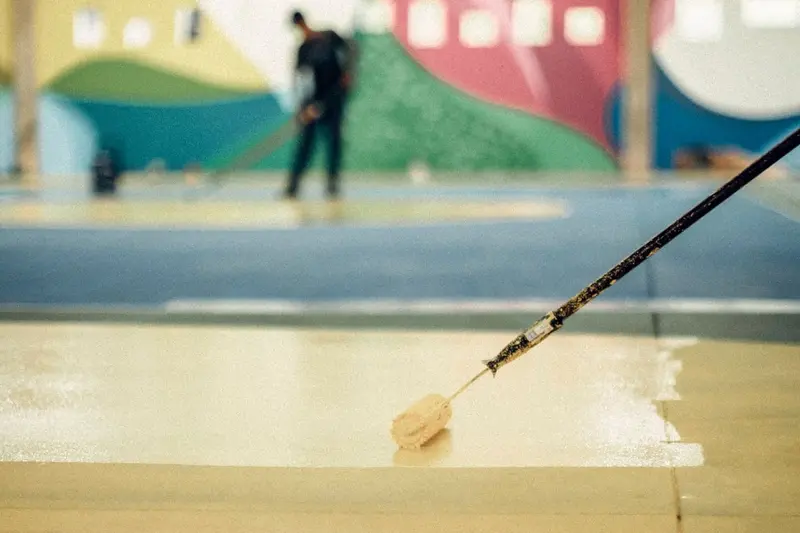
- Primer or base coat, often pigmented, rolled or squeegeed onto the ground concrete. A moisture-mitigating primer is used here if the slab tested high.
- Flake broadcast into the wet base coat, thrown by hand until the floor is covered for a full broadcast.
- Scrape and sweep once the base coat has cured enough: loose flakes are collected and the surface is scraped smooth.
- Topcoat, one or two clear coats, often polyaspartic, with grit added if requested.
Each coat has to reach the right stage before the next goes on, which is what sets the length of the job.
Typical timelines
| System | Install | Foot traffic | Cars back |
|---|---|---|---|
| Full polyaspartic, slab in good shape | Often 1 day | Same evening | Often 1 to 2 days |
| Epoxy base, flakes, polyaspartic topcoat | 1 to 2 days | About a day | About 1 to 2 days |
| All-epoxy flake or solid system | 2 to 3 days | About a day | Several days to a week |
| Metallic epoxy | 2 to 3 days | About a day | About a week, if used for cars |
These are typical ranges in mild weather. Heavy repairs, moisture mitigation and cold temperatures add time; the installer’s product data sets the real numbers.
Why waiting matters
A coating can feel hard long before it is fully cured. Epoxies keep curing for days, commonly about a week to reach full chemical resistance. Parking too early is one of the main causes of hot tire pickup, and dragging heavy items across a fresh floor can scratch or mar it. During the first week, avoid spills of harsh chemicals, set rubber mats aside, and move heavy items back carefully.
Weather and timing in the Triangle
- Temperature. Most coatings list a minimum temperature for the slab and air. Epoxy cures slowly in a cold garage, which is why winter jobs often use polyaspartics or need heat.
- Dew point. Coatings should go down on a slab comfortably warmer than the dew point, a margin of about five degrees Fahrenheit is a common rule, so condensation cannot form under the film. Muggy summer mornings in the Triangle can rule out an early start.
- Humidity. High humidity can cause amine blush on curing epoxy and bubbles in polyaspartic; see epoxy floor turning yellow for more on blush.
- Heat. Summer heat shortens working time, so crews often start early and mix smaller batches.
After the install
Expect care instructions: how long before walking, parking and moving things back, what cleaners to use, and what the warranty covers. Keep leftover flakes if the installer offers them, which helps with repairs later. Felt pads under shelving and plywood under jack stands or motorcycle kickstands protect the new surface. The cleaning and care guide covers the routine from there.
An example two-car garage
A typical flake floor with a polyaspartic topcoat on a slab with a few cracks might go like this: the crew arrives in the morning, grinds and repairs until early afternoon, rolls the base coat and broadcasts flakes; the next morning they scrape, sweep and apply the topcoat, and by evening you can walk on it in socks. Cars come back a day or two later. For comparisons of systems and costs, see epoxy vs polyaspartic and the epoxy flooring guide.
Installation and cure time — common questions
How long before I can walk on a new epoxy floor?
Usually 12 to 24 hours for epoxy in mild weather, and often just a few hours for polyaspartic. Socks or clean shoes only at first, because the surface is still curing.
When can I park my car on a new garage floor?
It depends on the products and the temperature. Epoxy systems commonly need several days to a week before cars; polyaspartic systems often allow parking within a day or two. Follow the installer's time, and wait longer in cold weather.
Does weather affect epoxy installation?
Yes. Cold slows curing, high humidity can cause blush or bubbles, and a slab colder than the dew point can sweat under fresh coating. Installers check slab temperature and dew point and may reschedule.
Will the house smell during installation?
Some products have a noticeable odor while they cure, others very little. Keep the door between the garage and the house closed, ventilate the garage, and ask about low-odor options if anyone is sensitive.
More epoxy flooring guides
Want a floor looked at?
Call and describe the floor and what you want done, or send the details and we will follow up.