Oil stains on a garage floor: removal and coating prep
Concrete soaks up oil like a sponge. Fresh drips lift out with an absorbent and a degreaser; old stains sink deep, and before a coating goes down they have to be cleaned and ground out so the new floor can bond.
What you may notice
- Dark stains under the engine or transmission
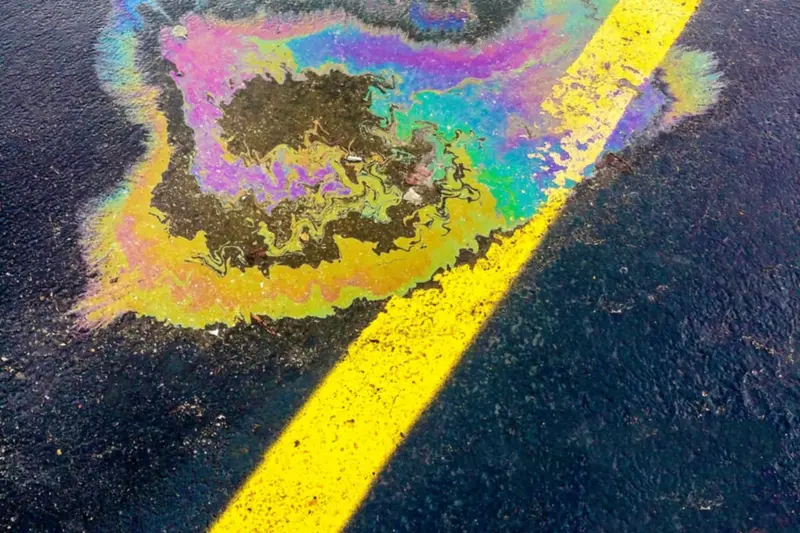
- Rainbow sheen when the floor is wet
- Spots that stay dark after scrubbing
- Slippery patches where oil has pooled
- Old coating peeling around stained areas
Tell us about the floor
Ground, not just etched
Every floor is diamond ground to open up the concrete before it is coated, the step most kits and bargain jobs skip and the main reason coatings peel.
Moisture tested first
Slabs are checked for moisture before anything goes down, because vapor rising through the concrete is what lifts a coating from below.
A written, itemized price
Grinding, crack repair, the coating system and the warranty spelled out line by line in writing, so you know what you are paying for.
Why oil sinks into concrete
Bare concrete is porous, full of tiny capillaries that wick liquids in. Motor oil, transmission fluid and power steering fluid soak below the surface within minutes, and the longer they sit, the deeper they go. Over the years, a parking spot can collect oil several millimeters into the slab. That is why scrubbing the surface rarely makes an old stain disappear: the oil is below where the brush can reach, and it slowly wicks back up.
Cleaning a fresh spill
- Soak it up. Cover the spill with an absorbent such as clay cat litter, sawdust or a commercial oil absorbent, and grind it in underfoot. Leave it for a few hours, then sweep it up.
- Degrease. Scrub the spot with a concrete degreaser and a stiff brush, following the product directions.
- Rinse and repeat until the stain stops lightening.
Speed matters more than the product. A spill cleaned the same day often leaves no trace at all.
Lifting old stains
Old, dark stains need more time. A poultice, an absorbent powder mixed with a degreaser or solvent into a paste, is spread over the stain, covered and left to dry, drawing oil up into the powder as it does. Enzyme- and microbe-based cleaners, which break down oil over days, also work on many stains. Expect several rounds, and expect the deepest stains to lighten rather than vanish. Pressure washing alone mostly moves oil around.
Oil and floor coatings
For a coating, an oil stain is more than a cosmetic problem. Primers need clean, open concrete to soak into, and oil in the pores blocks them. A coating applied over oil may look fine at first, then lift or bubble over the stain as the oil works its way up. Many failed DIY floors show their first peeling exactly where the car leaked. The peeling garage floor epoxy page shows the other patterns of failure.
How stained slabs are prepared
Professional prep deals with oil in steps:
- Degrease heavy contamination before grinding, so the grinder does not spread oil across the floor.
- Grind the whole floor, taking extra passes over stained areas to remove oil-soaked concrete.
- Check stained spots after grinding with a few drops of water: water that soaks in means clean concrete; water that beads means oil is still there.
- Treat remaining contamination with more degreasing, heat to draw oil to the surface, or a primer formulated to tolerate it.
Concrete grinding and prep explains the equipment, and garage floor epoxy shows the full system that follows.
After the floor is coated
A coated floor turns oil from a permanent stain into a quick wipe. Keep a drip tray or a small mat under any car with a slow leak, clean spills when you see them, and use a pH-neutral cleaner rather than harsh solvents on the coating. Brake fluid deserves particular care, because it can soften some coatings if left sitting; wipe it up right away. The cleaning and care guide covers safe products.
Other fluids on the floor
Not every stain is motor oil. Antifreeze leaves a sweet-smelling, often green or orange residue that should be cleaned up quickly, because it is poisonous to pets. Gasoline and brake fluid can soften some coatings, and rust from tools or furniture leaves orange marks that need a cleaner made for rust rather than a degreaser.
Fix the leak, too
A coating protects the floor, but it does not fix the car. A spot that refills after every cleaning means something under the car needs attention, and that leak will still be there after the floor is coated.
Oil stains on the garage floor — common questions
What removes old oil stains from concrete?
A poultice works best on old stains: an absorbent powder mixed with a degreaser or solvent, left on to draw the oil out, then scraped off. Several applications may be needed, and some deep stains never fully disappear.
Can you coat over oil stains?
Not as they are. Oil left in the surface keeps primers from bonding and can bleed back up. Stains are cleaned, ground out and checked; deep contamination sometimes needs heat, a degreasing treatment or an oil-tolerant primer.
Will a coated floor resist oil?
Yes. A coated surface keeps oil on top, where it wipes up, instead of letting it soak in. Clean drips promptly, because some fluids, such as brake fluid, can soften or stain coatings if left sitting.
Other floor problems
Not sure what is wrong with the floor?
Call and describe the floor and what you are seeing, or send a few details and we will get back to you.