Concrete crack repair in Cary, NC
Almost every garage slab cracks, because concrete shrinks as it cures. The repair depends on whether a crack is stable or still moving, and good repairs keep cracks from showing through a new coating.
- Cracks chased open with a diamond blade
- Rigid or flexible fillers matched to the crack
- Spalls and pits rebuilt
- Control joints filled or kept open
- Repairs ground flush with the floor
Covering Cary · Apex · Holly Springs · Morrisville · Raleigh
Get a quote for concrete crack repair
Ground, not just etched
Every floor is diamond ground to open up the concrete before it is coated, the step most kits and bargain jobs skip and the main reason coatings peel.
Moisture tested first
Slabs are checked for moisture before anything goes down, because vapor rising through the concrete is what lifts a coating from below.
A written, itemized price
Grinding, crack repair, the coating system and the warranty spelled out line by line in writing, so you know what you are paying for.
Why choose us
Floors that stay bonded in garages that get used
A garage floor coating lives with hot tires, road salt, dropped tools and Triangle humidity. Grinding the slab, repairing its cracks, testing for moisture and choosing the right system are what keep it bonded for years.
- Diamond-ground prep
- Moisture tested first
- Cracks repaired before coating
- Epoxy and polyaspartic systems
- Written, itemized estimates
- Local to Cary
Why concrete cracks
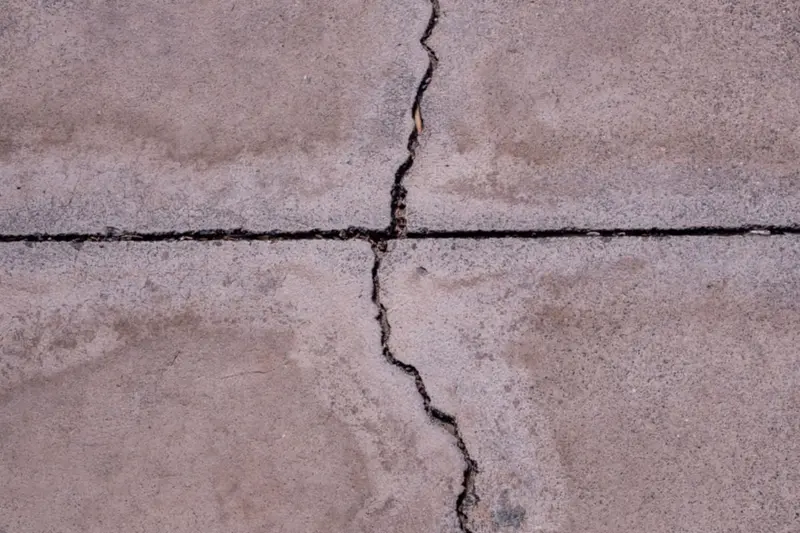
Concrete shrinks as it cures and dries, and a slab on the ground is held back by friction with the base beneath it. Something has to give, and that is why builders cut control joints: straight grooves that give the slab a planned place to crack. Cracks also come from settling soil, tree roots, heavy loads near the edges, poor compaction under the slab and the freeze-thaw cycles that come a few times each Triangle winter. Most garage floor cracks are shrinkage cracks, cosmetic rather than structural, but they still need attention before a floor is coated.
Stable or moving: the key question
The repair depends on whether a crack has stopped moving:
- Stable cracks are filled with a rigid material, usually an epoxy or polyurea crack filler, sometimes mixed with sand or silica for body, then ground flush. Under a coating, they disappear.
- Moving cracks, which open and close with temperature and moisture, need a flexible filler that can stretch. A rigid repair over a moving crack simply cracks again.
- Control joints are designed to move. They are cleaned out and filled with a semi-rigid or flexible joint filler, or left as a visible joint in the coating, depending on the floor.
Signs a crack is still active include fresh, sharp edges, debris in the crack that has been crushed, or a crack that has visibly grown over time.
How cracks are repaired
- Chase the crack. A grinder with a diamond blade opens the crack into a clean, slightly wider channel so filler can penetrate rather than bridging the top.
- Clean it out. Dust and loose material are vacuumed from the channel.
- Fill. The chosen filler is worked into the crack, slightly overfilled.
- Grind flush. After it cures, the repair is ground level with the surrounding floor.
- Coat. The repair is coated along with the rest of the floor.
Spalls, pits and broken edges
Cracks are not the only damage a slab collects. Spalling, where the surface flakes or pops off, is common near garage doors where salt brine drips off cars in winter, and on slabs that were overworked when they were finished. Corners and edges of joints chip where tires and jacks roll over them. These areas are cleaned back to sound concrete and rebuilt with an epoxy mortar or repair compound before coating; see pitted or spalling concrete.
When to call an engineer
Some cracks point to something more serious than shrinkage: cracks wider than about a quarter inch, one side higher than the other, cracks that line up with cracks in the foundation walls, or doors and windows nearby that have started sticking. Those warrant a structural engineer before any cosmetic repair. Coating over a crack that is still growing hides the evidence without fixing the cause.
Cracks keep coming, slowly
Even a perfectly repaired floor keeps living. Slabs move slightly with the seasons for years, and new hairline cracks can appear, especially in the first few years after a house is built. A coating bridges the finest hairlines; anything wider gets the same treatment as the original cracks, opened, filled and blended in, usually with a little matching flake on a flake floor.
What repaired cracks look like afterward
On a flake floor, a well-repaired stable crack is usually invisible. On solid colors and metallic finishes, repairs can show faintly as a slightly different texture, and a moving crack may reappear as a hairline in the coating. That is normal and does not mean the coating is failing. The cracked garage floor page explains which cracks to worry about, and garage floor epoxy shows where crack repair fits in a full coating job.
Concrete crack repair — common questions
Are cracks in a garage floor a structural problem?
Usually not. Hairline shrinkage cracks are normal in slabs on the ground. Cracks wider than about a quarter inch, cracks where one side sits higher than the other, or cracks that keep growing are worth having a structural engineer look at.
What is the difference between a crack and a control joint?
Control joints are the straight grooves cut or tooled into a slab so it cracks there, out of sight, as it shrinks. Random cracks form where the slab cracked anyway. Joints are usually filled with a flexible material; stable random cracks with a rigid one.
Will a repaired crack show through the new coating?
A stable crack filled and ground flush usually disappears under a flake finish. A crack that is still moving can reopen as a fine line, which is why moving cracks get a flexible filler and sometimes a joint is kept in the coating.
Problems this fixes
Often booked with this