Dusty concrete floor: why it dusts and how to stop it
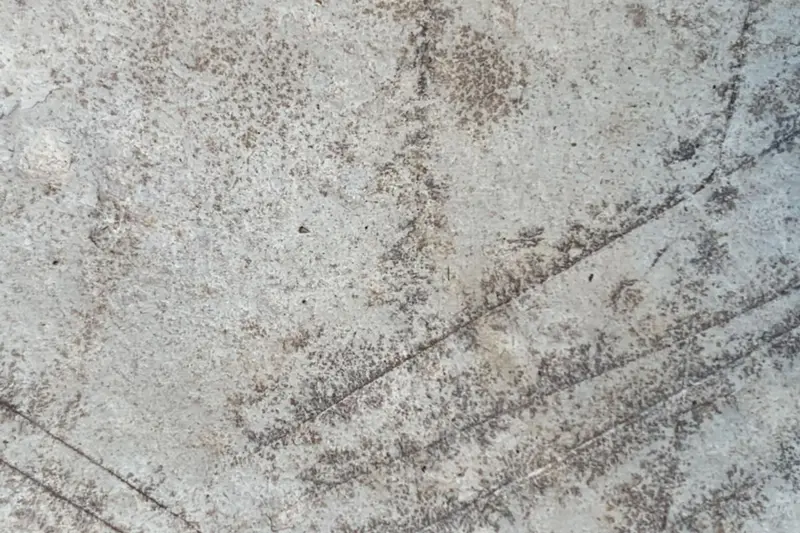
A slab that leaves gray powder on everything, no matter how often it is swept, has a weak surface layer that is slowly wearing away. Hardening that layer, or removing it and coating the floor, ends the dust.
What you may notice
- Fine gray powder that returns soon after sweeping
- Dust tracked into the house on shoes and paws
- A chalky film on boxes and tools stored on the floor
- Surface wearing away under tires and furniture feet
- Exposed sand where the top has worn off
Tell us about the floor
Ground, not just etched
Every floor is diamond ground to open up the concrete before it is coated, the step most kits and bargain jobs skip and the main reason coatings peel.
Moisture tested first
Slabs are checked for moisture before anything goes down, because vapor rising through the concrete is what lifts a coating from below.
A written, itemized price
Grinding, crack repair, the coating system and the warranty spelled out line by line in writing, so you know what you are paying for.
What concrete dusting is
When a slab is placed, water and the finest particles of cement rise toward the surface. If the top is finished too early or too wet, or allowed to dry too fast, that top layer, called laitance, ends up weaker than the concrete below it. Over the years, tires, feet and sweeping wear it away a little at a time, releasing a fine gray powder that settles on everything in the garage and gets tracked into the house. The slab underneath is usually sound; it is only the skin that is weak.
Common causes
- Water added on site to make the concrete easier to place and finish, which weakens the whole mix and especially the surface.
- Finishing while bleed water was on top, which works water back into the surface layer.
- Sprinkling water during troweling, an old habit that weakens the top.
- Poor curing, letting the slab dry out in its first days instead of keeping it moist.
- Cold weather and unvented heaters, which can cause carbonation that leaves a soft, chalky surface.
- Abrasion over time on slabs that were never sealed or coated.
How weak is the surface?
A quick scratch test tells you a lot. Drag the tip of a key or a screwdriver across the floor with firm pressure. Sound concrete leaves a faint line; a dusting surface scores easily and leaves a groove with powder in it. Also watch how the floor takes water: a weak, porous surface darkens and soaks up water almost instantly. If the scratch goes deeper than a sixteenth of an inch or so, plan on grinding rather than just sealing.
Ways to stop the dust
- Densifier. A penetrating lithium or sodium silicate reacts with the concrete to harden the surface. It suits floors with mild dusting that you want to keep as bare concrete.
- Grind and coat. Diamond grinding removes the weak layer entirely and exposes sound concrete, which is then coated. This is the most complete fix for a garage, and the coating keeps the surface from wearing again; see garage floor epoxy.
- Polish. Grinding the weak layer away and polishing the sound concrete beneath, with a densifier along the way, gives a hard, dust-free bare floor; see polished concrete.
Why paint and thin coatings fail on dusting floors
A coating bonds only as well as the surface it sits on. Roll paint or a thin kit coating over a dusting slab, and it grips the powder rather than the concrete. The result is a floor that peels in sheets, often with gray dust stuck to the back of every flake. Grinding first is what makes any coating work on these floors. The DIY epoxy kits guide explains why most kits skip that step.
Until it is fixed
Vacuum instead of sweeping, using a vacuum with a good filter, so the dust is captured instead of thrown into the air. Damp mop occasionally. Keep a mat at the door into the house. Avoid stacking boxes and stored items directly on the floor, where the powder collects on them, and avoid pressure washing, which can erode a weak surface faster.
Dusting and other surface problems
Dusting slabs often have company: pitting, scaling near the door, and stains that soak in fast because the surface is so porous. If you see those too, the pitted or spalling concrete page covers the related damage. Whatever the combination, the starting point is the same: grind away what is weak, repair what is broken, then protect the floor. Concrete grinding and prep explains how that first step is done.
Dusty concrete floor — common questions
What causes concrete to dust?
Usually a weak top layer from how the slab was finished: extra water in the mix or worked into the surface, finishing while bleed water was still on top, or poor curing. Unvented heaters run in a closed space while the concrete was curing can also weaken the surface.
Will sealing a dusty floor stop it?
A penetrating densifier can harden a mildly dusting surface and cut the dust a great deal. Badly weakened surfaces need the weak layer ground off; a film-forming sealer applied over a dusting surface usually peels.
Is concrete dust harmful?
Fine concrete dust irritates the eyes and lungs, and dust from grinding or cutting concrete contains crystalline silica, which is hazardous to breathe. Sweeping a dusting floor stirs it up; a vacuum with a good filter is better.
Other floor problems
Not sure what is wrong with the floor?
Call and describe the floor and what you are seeing, or send a few details and we will get back to you.