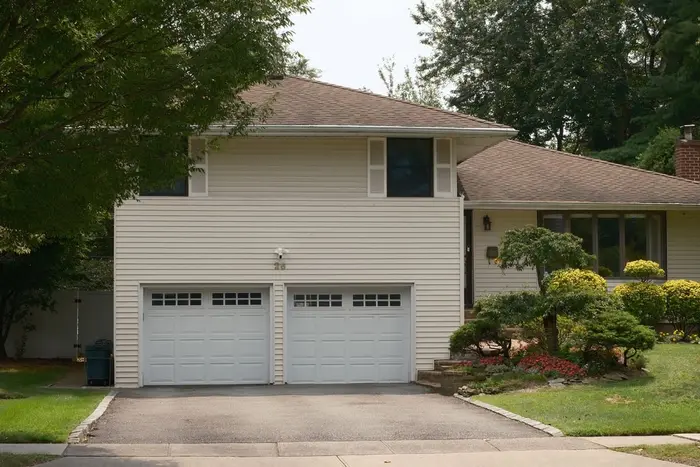
Garage floor epoxy in Cary, NC
A garage floor coating is only as good as the bond under it. The concrete is diamond ground, repaired and checked for moisture first, then coated in layers built for hot tires, oil and road salt.
- Diamond grinding with dust control
- Cracks and broken spots repaired first
- Moisture tested before coating
- Flake, solid color or metallic finishes
- Topcoats that resist hot tires and chemicals
Covering Cary · Apex · Holly Springs · Morrisville · Raleigh
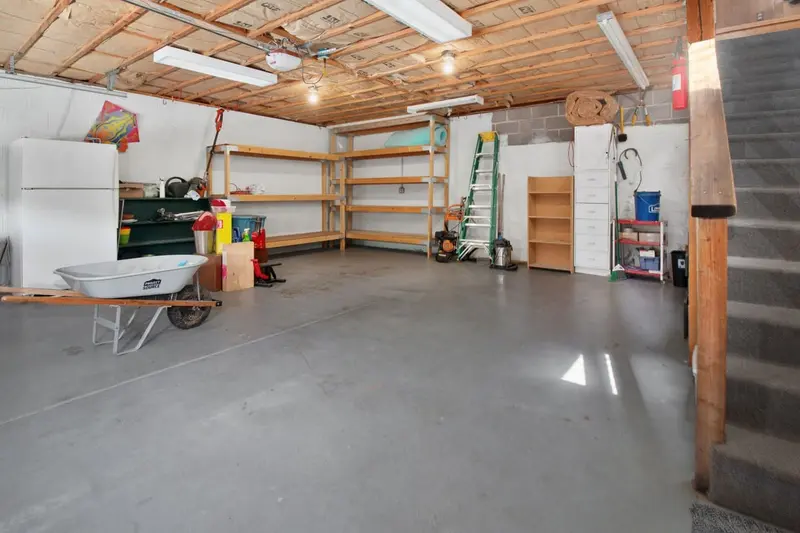
Get a quote for garage floor epoxy
Ground, not just etched
Every floor is diamond ground to open up the concrete before it is coated, the step most kits and bargain jobs skip and the main reason coatings peel.
Moisture tested first
Slabs are checked for moisture before anything goes down, because vapor rising through the concrete is what lifts a coating from below.
A written, itemized price
Grinding, crack repair, the coating system and the warranty spelled out line by line in writing, so you know what you are paying for.
Why choose us
Floors that stay bonded in garages that get used
A garage floor coating lives with hot tires, road salt, dropped tools and Triangle humidity. Grinding the slab, repairing its cracks, testing for moisture and choosing the right system are what keep it bonded for years.
- Diamond-ground prep
- Moisture tested first
- Cracks repaired before coating
- Epoxy and polyaspartic systems
- Written, itemized estimates
- Local to Cary
What a garage floor coating has to survive
A garage floor in the Triangle takes more abuse than most floors in the house. Tires come in hot from the road and sit on the same spots every night. In winter, salt brine from treated roads drips off the car. Oil, coolant and brake fluid leak; tools, ladders and bikes get dropped; red clay and spring pollen get tracked in. A coating that lasts has to bond tightly to the concrete, be thick enough to take wear, and finish with a topcoat that resists chemicals and abrasion.
How the floor is prepared
Nearly every coating failure traces back to preparation, so it gets most of the attention:
- Moisture check. A quick test shows whether vapor is coming up through the slab, which decides the primer.
- Diamond grinding. A planetary grinder with diamond tooling removes the weak top layer, old sealers and paint, and opens the surface to a rough profile. A vacuum with a HEPA filter captures the dust.
- Edges and corners. Hand grinders reach along walls, steps and the garage door threshold.
- Repairs. Cracks are opened and filled, broken spots and pits are rebuilt, and everything is ground flush. Concrete crack repair covers the methods.
- Cleanup. The floor is vacuumed until no dust is left to get trapped in the first coat.
The coating system
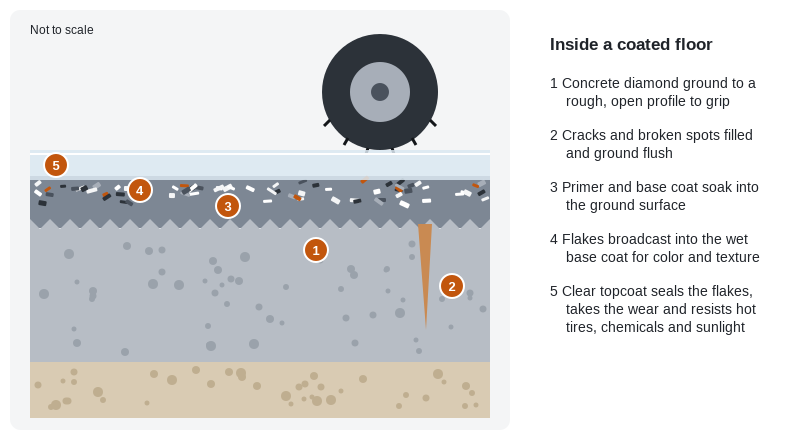
A typical residential system is built in layers. A primer or base coat soaks into the ground concrete and forms the bond. Most garages then get colored flakes broadcast into the wet base coat, covered by a clear topcoat that takes the wear; a solid-color or metallic finish replaces the flakes on some floors. The topcoat matters as much as the base: epoxy topcoats yellow in sunlight, so garages that face the afternoon sun with the door open usually get a polyaspartic or polyurethane topcoat instead. The guide to epoxy vs polyaspartic compares the chemistries.
Choosing a finish
- Flake is the most popular garage finish: textured, forgiving of dust and tire marks, and available in dozens of blends. See flake epoxy floors.
- Solid color with a light texture suits workshops where small parts need to be found on the floor.
- Metallic gives a glossy, showroom look but shows scratches and dust more. See metallic epoxy floors.
- Anti-slip grit in the topcoat is worth adding to almost any garage that gets wet from rain, snowmelt or a hose.
How long it takes, and when you can park
A two-car garage in good condition usually takes one or two days to prep and coat. Fully epoxy systems need about a day before you can walk on them and several days before cars come back in, while polyaspartic systems can often take cars within a day or two. Cold and damp weather lengthens those times. The guide to installation and cure time walks through the schedule day by day.
When a garage floor needs more than a coating
Some floors need extra work first. Dark, damp patches or white powder on the concrete point to moisture; see damp or sweating garage floor. A floor already coated with a peeling DIY kit has to be ground back to bare concrete; see peeling garage floor epoxy. Deep oil stains, wide cracks and badly pitted areas all add prep time and show up as separate lines on a good quote. The epoxy floor cost guide explains how those items affect the price.
Garage floor epoxy — common questions
Do I need to empty the garage?
Yes, completely, including anything on low shelves, because the whole floor is ground and coated wall to wall. Plan on parking outside until the coating is cured enough for cars.
Will epoxy hide the cracks in my garage floor?
Not on its own. Cracks are filled and ground flush before coating, and a flake finish disguises them well, but a crack that is still moving can show through again as a fine line.
Is an epoxy garage floor slippery?
A smooth, glossy coating can be slick when wet. Flake finishes add texture, and anti-slip grit can be mixed into the topcoat, which most garages should have.
How long does a garage floor coating last?
A well-prepared, professionally installed system commonly lasts many years in a home garage, often a decade or more, with a fresh topcoat when the wear layer thins. Thin retail-kit coatings often fail within a year or two.
Problems this fixes
Often booked with this