Pitted or spalling concrete: causes and fixes
When the top of a slab flakes, pits or pops out in chips, the surface has been broken down by salt, freezing water or a weak finish. Rebuilding the damaged areas comes before any coating.
What you may notice
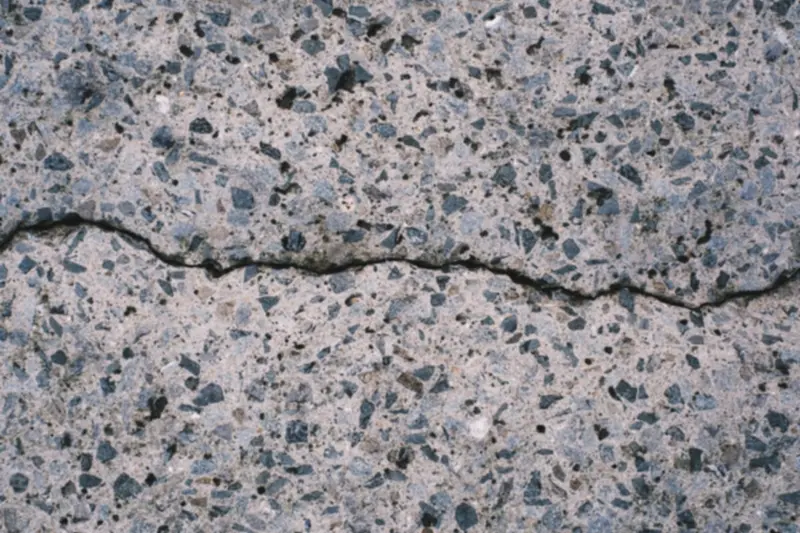
- Shallow flaking where the surface has peeled off
- Small craters, sometimes with a broken stone at the bottom
- Damage where cars drip in winter
- Rough, sandy patches near the garage door
- Edges of joints breaking away
Tell us about the floor
Ground, not just etched
Every floor is diamond ground to open up the concrete before it is coated, the step most kits and bargain jobs skip and the main reason coatings peel.
Moisture tested first
Slabs are checked for moisture before anything goes down, because vapor rising through the concrete is what lifts a coating from below.
A written, itemized price
Grinding, crack repair, the coating system and the warranty spelled out line by line in writing, so you know what you are paying for.
What pitting and spalling are
Spalling is the flaking or peeling of the top layer of a concrete slab, from a shallow scaling that leaves a rough, sandy surface to deeper pieces breaking away. Pitting describes the small craters and holes that form where bits of the surface or individual stones have popped out. Both start at the surface and work down, and both get worse every winter if nothing stops water and salt from getting in.
Why it happens
- Salt brine from the roads. Before winter storms, road crews in North Carolina pretreat highways with salt brine, and cars carry it home on their tires and undercarriages. It drips onto the garage floor, soaks in and concentrates as the water evaporates.
- Freeze and thaw. Nights below freezing are common in Triangle winters. Water in the surface pores freezes, expands and cracks the paste around it, a little more each cycle.
- Weak finishing. Slabs finished while bleed water was on the surface, or with water added to make finishing easier, end up with a weak top layer that scales easily.
- Poor curing. Concrete that dries too fast in its first days never develops full surface strength.
- Absorbent stones. Some aggregates soak up water and expand, breaking off a cone of concrete above them, which leaves a popout.
Where the damage shows up
In a garage, spalling concentrates where vehicles park and drip, especially the first few feet inside the door and the lanes under the wheel wells. Look closely at the strip below the front bumper, where snow and slush fall off the car as it warms up; it is often the worst area on the floor. It is also common on driveway aprons, front walks and steps where de-icers were used, and on older slabs that were never sealed.
How damaged areas are repaired
- Remove everything loose. Weak, flaking concrete is chipped and ground back to sound material.
- Grind the floor to open the surface and reveal how far the damage goes.
- Fill and rebuild pits and spalled areas with an epoxy mortar or repair compound, troweled level.
- Grind the repairs flush so the surface is even.
- Coat the floor, sealing the surface against the salt and water that caused the damage.
On flake floors, rebuilt areas disappear into the pattern. On solid colors, the repairs can show slightly, which is one reason flake finishes are popular on older, damaged slabs. Concrete crack repair covers the repair materials.
Preventing more damage
- Coat or seal the floor so salt and water cannot soak into the surface; see garage floor epoxy.
- Use containment mats under cars in winter to catch salty slush.
- Rinse salt away after storms instead of letting brine dry on the slab.
- Avoid harsh de-icers on concrete, especially on slabs less than a year old.
When it is deeper than the surface
Spalling that exposes rusting wire mesh or rebar, or large slabs of concrete breaking away, points to corrosion inside the slab or a structural problem, and needs a repair contractor or engineer before any coating. This is less common in residential garages than in parking decks and commercial slabs, but it is worth checking during prep. Grinding often reveals the true extent of the damage; see concrete grinding and prep.
Pitting and dusting together
A slab with a weak surface often both pits and dusts. If your floor sheds gray powder too, the dusty concrete floor page explains the shared causes and the fixes.
Pitted or spalling concrete — common questions
Does road salt really damage concrete?
It can. Salt brine dripping from cars soaks into the surface, and when that water freezes and thaws, the expansion breaks the top layer apart. Some de-icing chemicals also react with the concrete itself.
What is a popout?
A small, cone-shaped pit left when a piece of stone near the surface absorbs water, expands and breaks off the concrete above it. Popouts are cosmetic but should be filled before coating.
Will a coating stop spalling from getting worse?
Yes, once the damaged areas are repaired. A well-bonded coating keeps salt and water out of the surface, and those are what drive most spalling in garages.
Other floor problems
Not sure what is wrong with the floor?
Call and describe the floor and what you are seeing, or send a few details and we will get back to you.