Basement floor epoxy in Cary, NC
Basement slabs sit against damp soil, so moisture decides what can go on them. Tested first and primed where needed, a coated basement floor is bright, easy to clean and ready for a gym, shop or rec room.
- Moisture testing before any coating
- Vapor-blocking primers when needed
- Solid, flake or metallic finishes
- Good for gyms, shops and laundry areas
- Low-odor options for occupied homes
Covering Cary · Apex · Holly Springs · Morrisville · Raleigh
Get a quote for basement floor epoxy
Ground, not just etched
Every floor is diamond ground to open up the concrete before it is coated, the step most kits and bargain jobs skip and the main reason coatings peel.
Moisture tested first
Slabs are checked for moisture before anything goes down, because vapor rising through the concrete is what lifts a coating from below.
A written, itemized price
Grinding, crack repair, the coating system and the warranty spelled out line by line in writing, so you know what you are paying for.
Why choose us
Floors that stay bonded in garages that get used
A garage floor coating lives with hot tires, road salt, dropped tools and Triangle humidity. Grinding the slab, repairing its cracks, testing for moisture and choosing the right system are what keep it bonded for years.
- Diamond-ground prep
- Moisture tested first
- Cracks repaired before coating
- Epoxy and polyaspartic systems
- Written, itemized estimates
- Local to Cary
Why basements are different
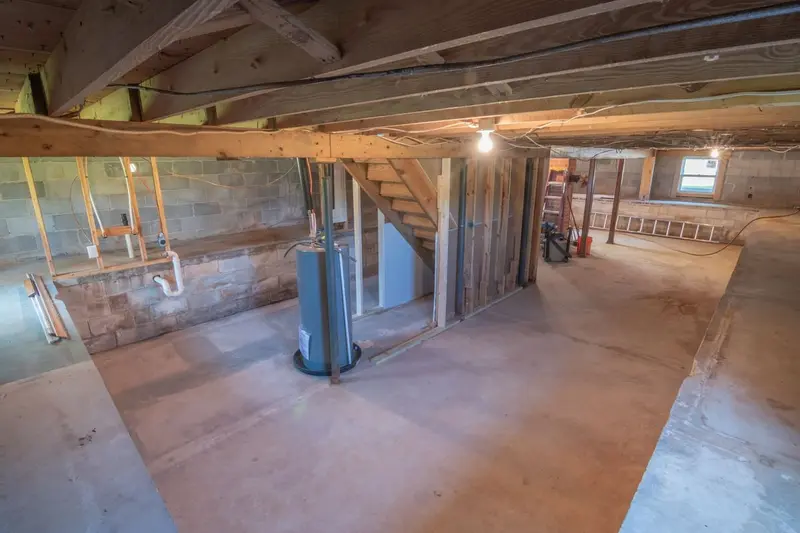
A garage slab has one face against the ground; a basement floor has soil pressing on it from below and often from the sides, and it never gets the drying air and sun that a garage does. Most basements in the Triangle are in older homes inside Raleigh’s Beltline, in parts of Cary, and in houses built on sloping lots where one side of the lower level is underground. Many of those slabs were poured over clay with no plastic underneath, and some have been patched, painted or glued down under carpet over the years. All of that has to be dealt with before a coating will hold.
Testing comes first
Before anything is quoted for a basement, the slab should be checked for moisture. A plastic sheet taped down overnight is a quick screen; a calcium chloride test or relative humidity probes give numbers that can be compared with the coating manufacturer’s limits. The results decide whether a standard primer will do or whether the floor needs a moisture-mitigating primer, which costs more but is the difference between a floor that lasts and one that blisters within a season. Concrete moisture mitigation explains the tests and the primers.
Water versus vapor
There is an important line between moisture a coating can handle and moisture it cannot:
- Vapor moving up through a slab can be held back by a primer designed for it.
- Liquid water, from a leak, a high water table, a failed sump or water coming through cracks and the joint between floor and wall, cannot. Those problems need drainage, grading, gutters or waterproofing first.
If the basement has ever had standing water, find out why and fix it before spending money on the floor.
Prep in an occupied basement
Basement prep follows the same steps as a garage, adjusted for working inside a home:
- Carpet tack strip, glue, paint and old sealers are ground off; mastic from old tile needs special care and should be tested, because some older tile adhesives contain asbestos.
- Diamond grinders are connected to HEPA vacuums so dust stays out of the rest of the house.
- Cracks and holes from old fixtures are filled and ground flush; see concrete crack repair.
- Floor drains, sump pits and the base of stairs are masked and detailed by hand.
Choosing a finish for a lower level
- Solid color with light texture suits laundry rooms, storage and workshops.
- Flake hides dust and wear in a busy family space or home gym.
- Metallic turns a basement bar or media room into a showpiece; see metallic epoxy floors.
- Lighter colors brighten a room with little natural light, which is most basements.
- Rubber mats over a coated floor suit the free-weight corner of a home gym.
Odor, ventilation and timing
Some coatings give off a strong smell as they cure, and a basement with small windows does not air out quickly. Ask about low-odor products, plan for fans that exhaust air to the outside, and consider scheduling the work for a weekend away. Cure is slower in a cool basement, so expect a little longer before heavy furniture or gym equipment goes back.
Signs to look for first
White powder along the bottom of walls or on the floor, a musty smell, peeling paint on the slab and dark damp patches after rain all point to moisture. The white powder on concrete and damp or sweating floor pages explain what each sign means. For a full overview of finishes, costs and timelines, start with the epoxy flooring guide.
Basement floor epoxy — common questions
Can you epoxy a basement floor that gets damp?
Often, if the moisture is vapor rather than standing water. A moisture-mitigating primer can hold back a lot of vapor, but leaks, flooding or water coming through cracks have to be fixed first; no coating stops liquid water under pressure.
Is a coated floor a good base for a home gym?
For many home gyms, yes, with rubber mats where heavy weights drop. A coated floor is easy to clean and stands up to sweat and spills, and a textured topcoat keeps it from getting slick.
Will the fumes be a problem in a basement?
Some coatings have a strong odor while they cure, which matters more in an occupied basement. Ventilation, low-odor products and scheduling the work for a time when the family can be out all help.
Problems this fixes
Often booked with this
Want plank flooring in the finished rooms down there instead? LVP and laminate installs by Apex Handyman